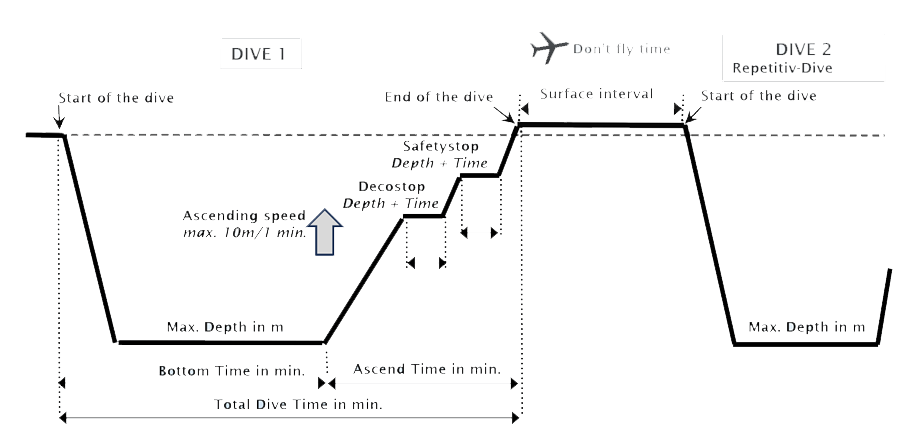
Using a profile like this, the individual phases of the dive and the associated technical terms can be clearly explained.
BASE TIME:
This is the time from the start of the dive until the start of the ascent.
ASCENT TIME:
The time from leaving the depth until reaching the water’s surface, includ any necessary safety or decompression stops.
MAXIMUM ASCENT SPEED:
The maximum permissible speed when ascending to the water’s surface.
DECOMPRESSION STOP:
A stop at the depth and for the duration specified in the table, which must be strictly observed. This is to ensure that excess nitrogen can be safely and gradually released from the body.
SAFETY STOP:
A voluntary but strongly recommended stop before ending the dive. Usually at a depth of 3 to 5 meters for about 3 to 5 minutes.
NO-FLY PERIOD / DON’T FLY:
The minimum waiting period between the last dive and boarding an aircraft. The lower cabin pressure can cause residual nitrogen in the body to expand, increasing the risk of decompression sickness. For recreational divers, a surface interval of at least 12 hours is generally recommended, depending on the number, depth, and type of dives.
SURFACE INTERVAL:
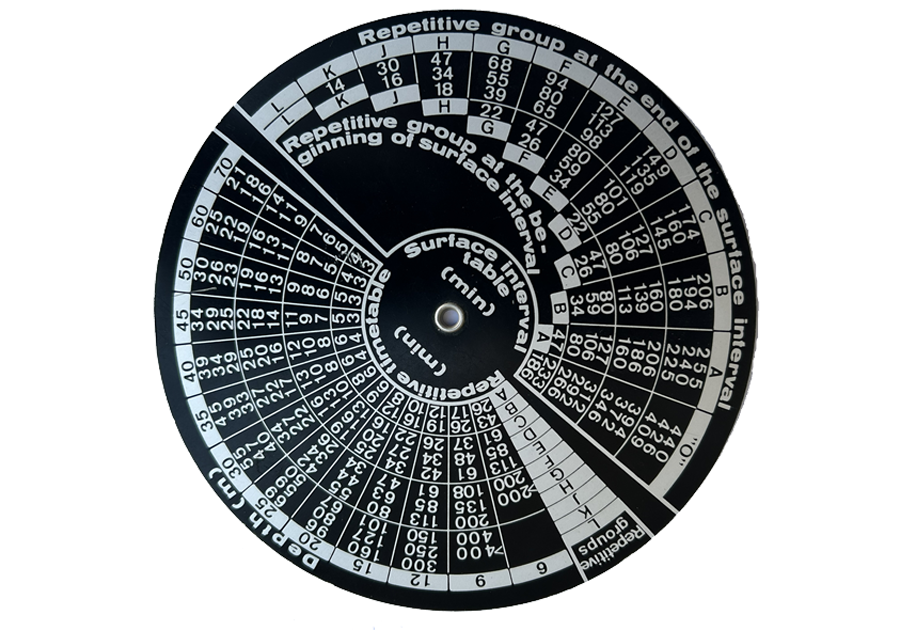
The time a diver spends between two dives.
REPEAT DIVE:
This occurs when another dive is made after a few hours (lunch break). In this case, the remaining nitrogen saturation from the first dive must be taken into account when planning the second dive.
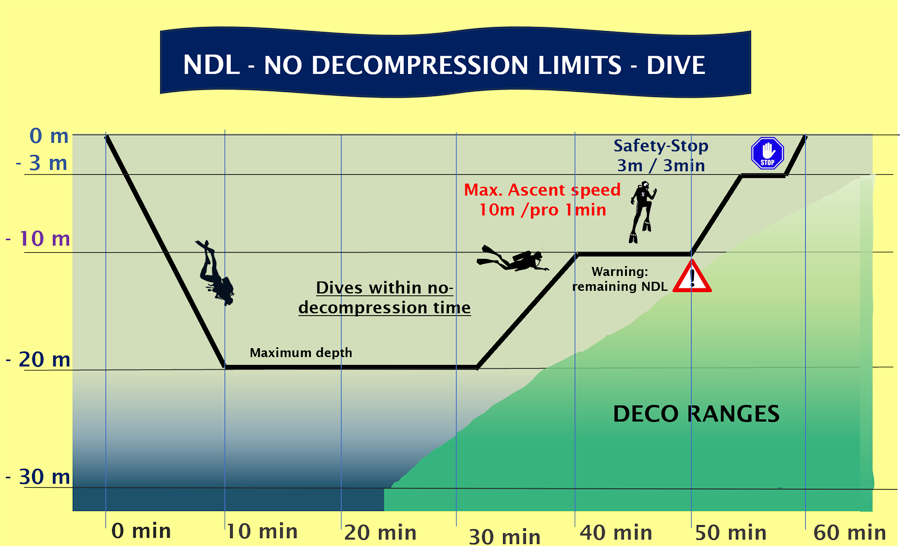
Finally, we’ll look at the terms “no-decompression time,” “no-decompression dive,” and “decompression dive.”
Research has shown that we can remain at a certain depth for a certain amount of time while absorbing only enough nitrogen to allow us to end the dive at any time.
Definition of NO-DIVE TIME.
NO-DIVE-LIMIT DIVE:
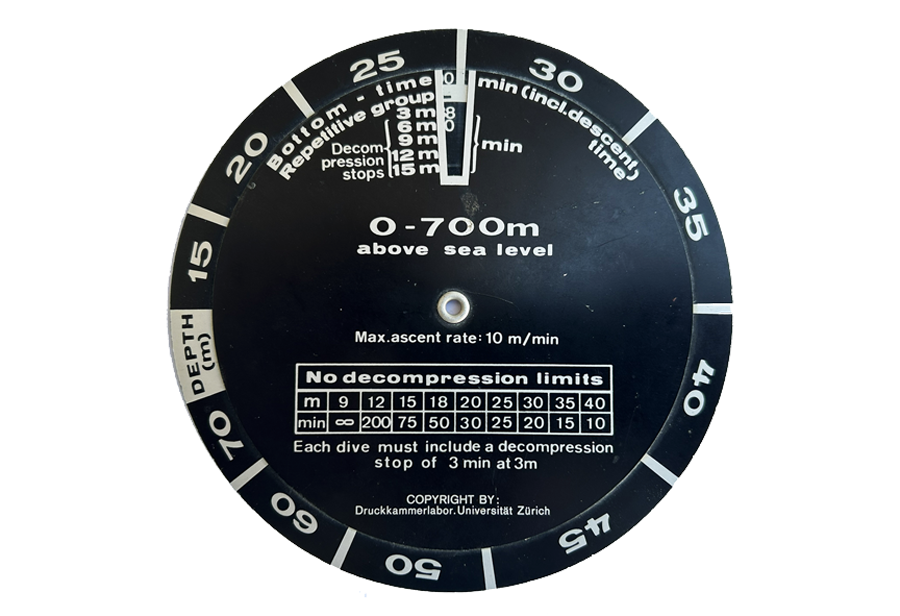
A dive in which 1) the available no-decompression time is not exceeded, 2) the ascent rate does not exceed 10 meters per minute, and 3) a 3-minute safety stop at a depth of 3 meters is observed.
Note: If we plan and conduct our dives exclusively based on no-decompression limits, this is the best and safest way to keep nitrogen under control.
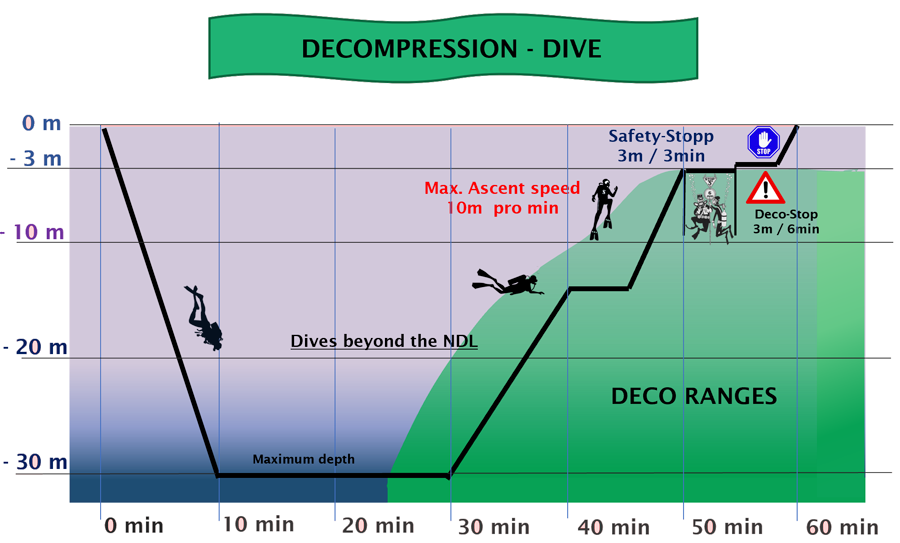
DECOMPRESSION DIVE:
A decompression dive is a dive in which the no-decompression limit is exceeded. This means that the diver must make mandatory decompression stops upon ascent so that excess nitrogen can be safely released from the body.
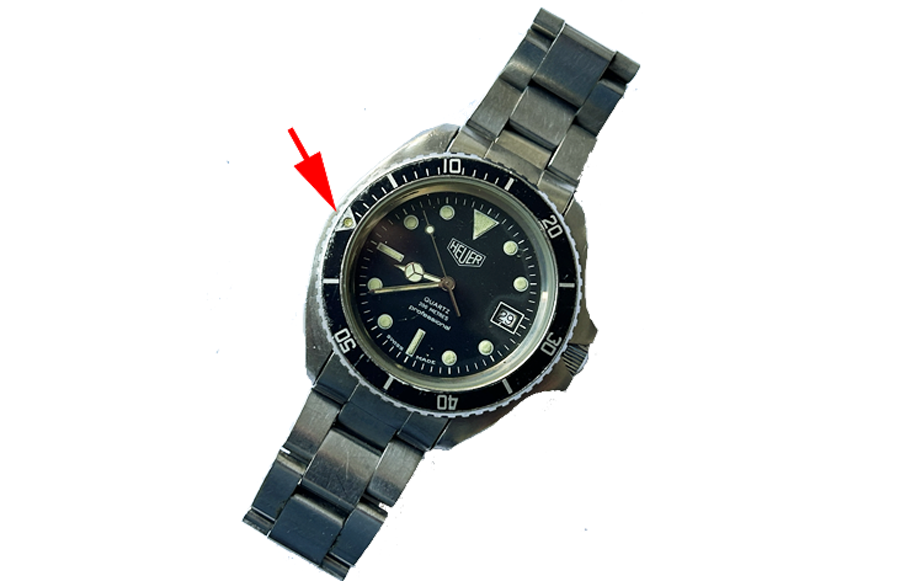
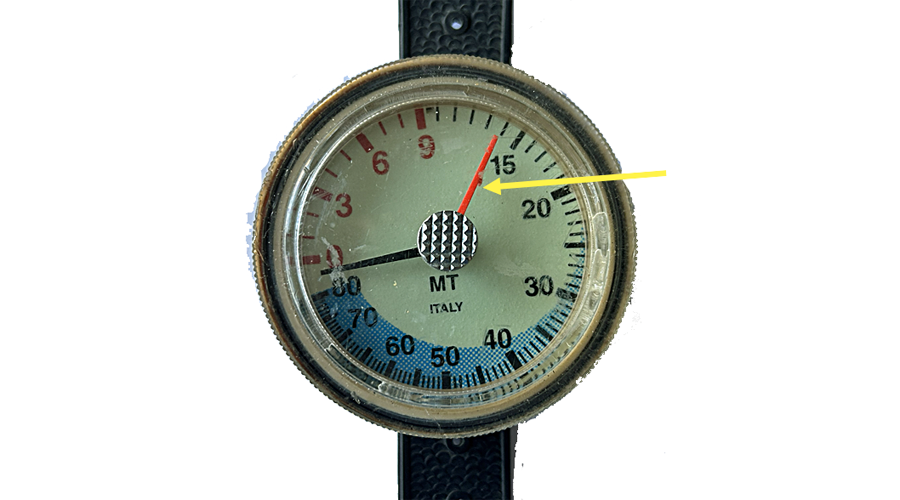
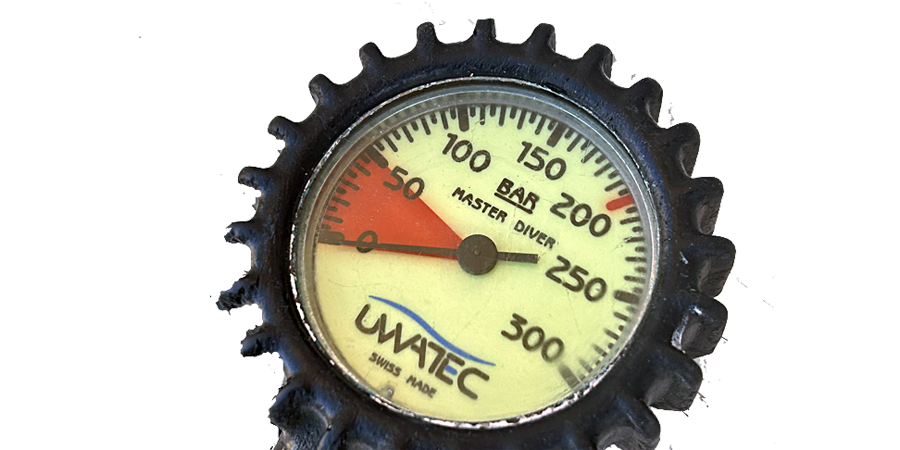
Before dive computers were available, divers needed a dive watch, a depth gauge, a pressure gauge, and dive tables to keep their nitrogen levels under control.
The diver’s watch featured a “n ” bezel (technical term: unidirectional rotating bezel) that could only be turned counterclockwise to mark the time elapsed since the start of the dive.
A depth gauge. Preferably one with a trailing hand. This is an additional hand that is driven by the main depth hand and thus records thegrösste maximum depth reached during the dive.
A pressure gauge to display the tank pressure (remaining air supply) during the dive. From 50 bar onward, this is typically highlighted with a red background.
A waterproof dive table. Those who didn’t have one would get a wristband for the depth gauge that had the no-decompression limits printed on it.
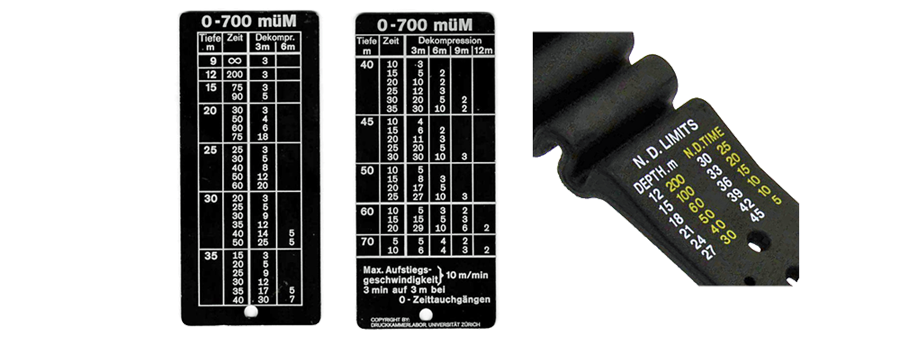
The days of diving with these instruments are over. Nevertheless, for years they served their purpose of keeping nitrogen levels under control. What’s more, they contributed significantly to our understanding of the principles behind how dive computers perform their calculations.
Even though we have calculators today, the basics of arithmetic remain indispensable.
Dive Computers— : From the Analog to the Digital Age
Scientists, engineers, and manufacturers were already working on ways to present the effects and consequences of nitrogen absorption during diving in a simpler and more intuitive manner—without relying on tables—long before the age of microprocessors. . The goal was to make the theoretical findings of decompression research directly applicable during the dive and to record the calculations of nitrogen absorption and release as automatically as possible. Pneumatically controlled analog computers represented a first significant step in 1955. They attempted to mechanically or pneumatically simulate the absorption and release of nitrogen in various tissues. This involved utilizing physical processes whose behavior resembled the laws governing gas absorption in the human body.
In 1959, the market launch of the SOS Automatic Decompression Meter (DCB), developed by Carlo Alinari and Victor Aldo De Sanctis, marked the beginning of a new chapter in the history of diving. The device consisted of a gas-filled membrane and a special capillary system, designed to simulate the nitrogen saturation of a theoretical tissue. During the dive, the system reacted to changes in pressure and indicated to the diver how close he was approaching the decompression limits.
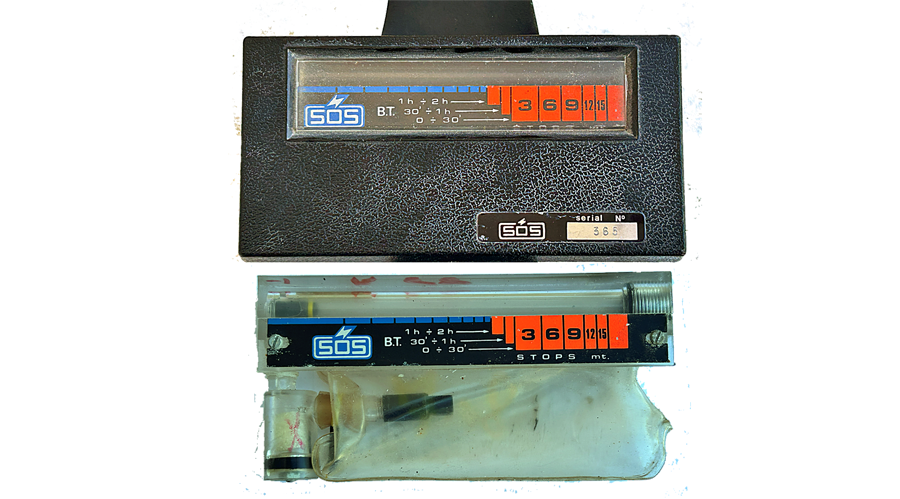
Considered the first commercially successful analog dive computer, this decompression meter cost only about $18 when it was introduced, which led to its widespread adoption. By the 1970s, more than 50`000 units had been sold worldwide. While the SOS Automatic Decompression Meter largely exhausted the possibilities of analog technology, the development of microelectronics ushered in a fundamental transformation. The rapid development of microelectronics in the 1970s and early 1980s opened up entirely new possibilities. With powerful integrated circuits, complex decompression algorithms could be calculated in real time for the first time. This marked the beginning of the transition from the analog to the digital age.
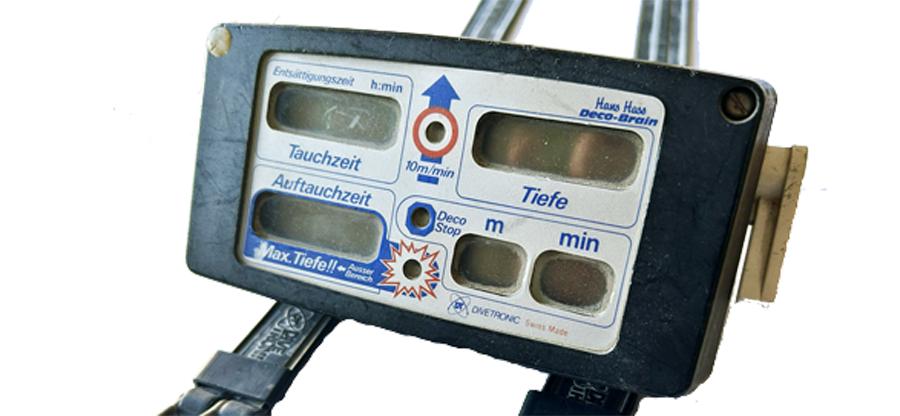
In 1983, the digital age of recreational diving began with the introduction of the Hans Hass Deco Brain. As part of his thesis for a degree in electrical engineering, Jürgen Hermann, a Liechtenstein native born in 1955, developed the first true digital dive computer.
The Hans Hass Deco-Brain, produced by Divetronic——a company founded specifically for this purposewas the first fully-fledged electronic decompression computer for recreational divers.
Here I’ll share another anecdote:
In June 1984, Jürgen Hermann visited the SUBEX base on the island of Elba, bringing many units of the Deco Brain with him. His goal was for us to test the Deco Brain under rigorous conditions as dive guides for an entire season. We were required to meticulously log every dive. In return, he sold us the Deco Brain at a significantly lower price than the regular retail price of around 1300 Swiss francs . Thus, we were among the few privileged individuals who could afford the expensive Deco Brain. .
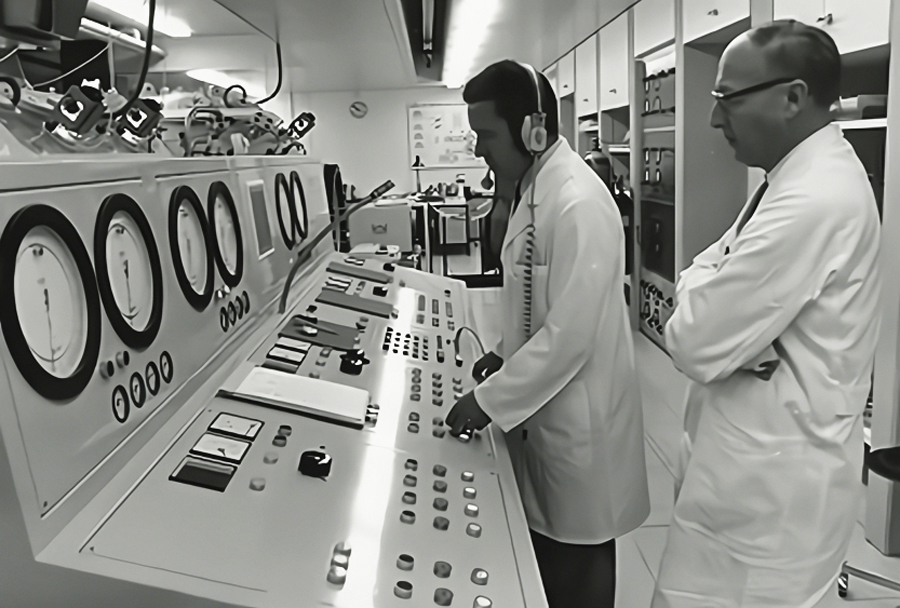
Technically, the DECO BRAIN was far ahead of its time. For the first time, it calculated complete decompression profiles in real time based on the Bühlmann ZH-L12 model. It could calculate multilevel dives, repetitive dives, and decompression stops.
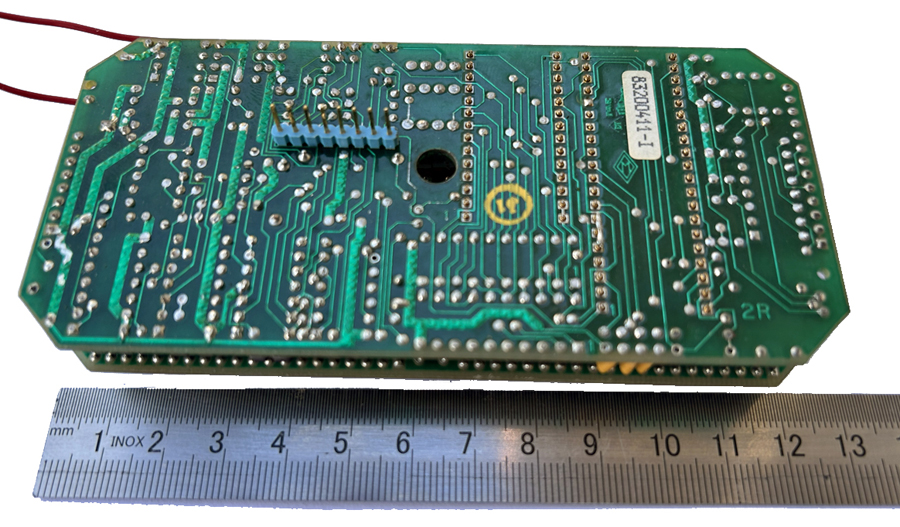
The circuit board visible in the photo illustrates why the DECO BRAIN was unusually large by today’s standards. It had a volume of 0.7 cubic decimeters and weighed 982 grams.
This is because, at the time, there were neither highly integrated microcontrollers nor energy-efficient chips. The processor, memory, pressure sensor, display, and rechargeable NiCd battery required much more space. This complex design makes the DECO BRAIN a fascinating milestone in the history of diving technology.
The pioneering work behind the development of the Deco Brain was not rewarded with financial success. Only about 3,000 units were sold worldwide, and production was discontinued in 1986. The problem wasn’t the software, but the material of the housing, which developed stress cracks and thus, in the truest sense of the word, led to the device “sinking.” In 1988, just five years later, the Dacor MICRO BRAIN was launched. Following the discontinuation of the DECO BRAIN, Divetronic developed the MICRO BRAIN for Dacor.
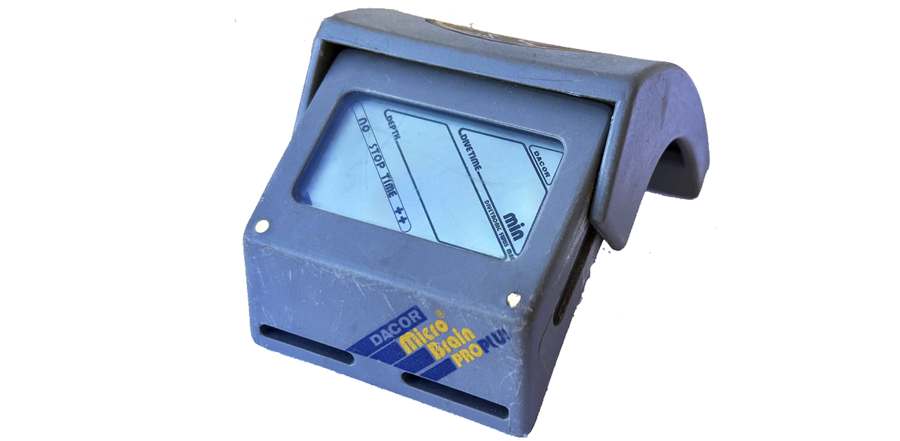
It took over the entire decompression calculation from the DECO BRAIN but benefited from the rapid advances in microelectronics. As a result, the entire computing electronics could be housed in a much more compact casing. With comparable functionality, the MICRO BRAIN was about 14 times smaller and, etwa 11 times lighter than its predecessor. The Micro Brain was the first dive computer to be mass-produced industrially.Der Micro Brain war der erste industriell in grösseren Mengen gefertigten Tauchcomputer.
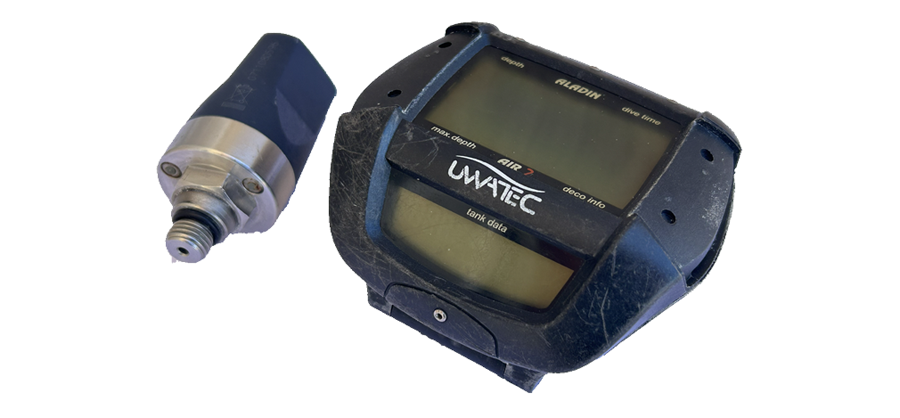
Its price was US$450, which was equivalent to approximately 700 Swiss francs at the time. In 1989, just one year later, Uwatec launched the Aladin Pro. Technically, the Aladin Pro was also based on the ZH-L12 decompression model developed by Bühlmann.
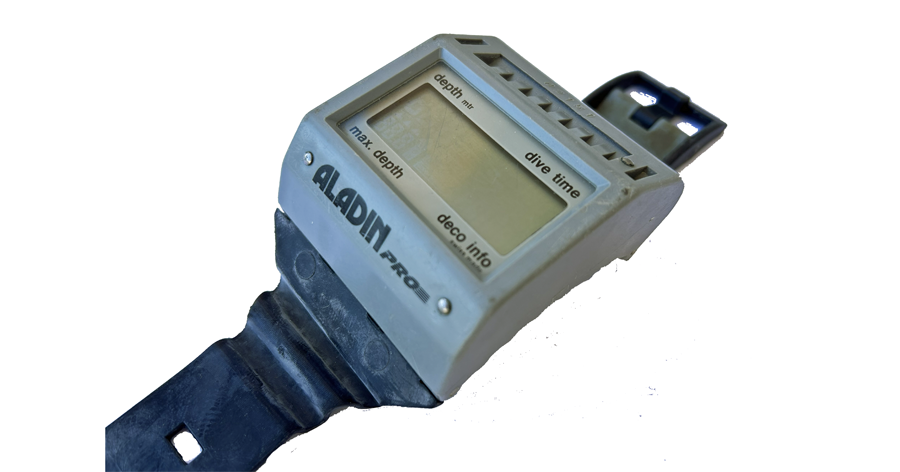
The Aladin’s success stemmed less from technical superiority than from its consistent focus on the needs of recreational divers. It often provided longer no-decompression times for typical multilevel dives, was extremely easy to read, and delivered clear warnings. At the same time, it benefited from the high level of trust in Bühlmann’s decompression models and the strong reputation of Swiss engineering. When dive computers reached the mass market in the late 1980s and early 1990s, the Aladin was recommended by many dive schools and dive centers.
Note: SUBEX was also among the pioneers of this development. We were one of the first dive centers to make diving with a computer standard practice—not just for our guides, but for all guests. To this day, the dive computer is an integral part of our rental dive equipment at no extra charge.
In the early 1990s, the name “Aladin” became virtually synonymous with dive computers. Uwatec launched various models that further refined the basic concept and offered additional features. The widespread acceptance of these devices played a decisive role in pushing dive tables into the background in recreational diving, where they were increasingly replaced by computer-assisted diving.bThis was also because the Aladin Sport was available for less than 500 Swiss francs.
In 1995, six years later, Uwatec launched the Aladin Air X series. Historically, the Air X was particularly significant because it was one of the first widely used air-integrated dive computers. It could detect tank pressure via a transmitter and use that data to calculate the remaining breathing gas reserve. The series also included the Aladin Air X Nitrox. This model allowed users to set the oxygen content (Nitrox mixture) instead of just compressed air. In 1998, an enhanced version, the Aladin Air Z, was introduced to the market.
It was based on the new ZH-L8 ADT decompression model, which took additional factors such as water temperature, the diver’s workload, and microbubble formation into account.Er war mit den neuen ZH-L8 ADT Dekopressionsmodell erweiterten Funktionen wie die Wassertemperatur, Arbeitsbelastung des Tauchers und Mikroblasenbildung programmiert. It could also be connected to a PC. um die Daten . Shortly thereafter, the Aladin Air Z became available in a version called the Aladin Air Z Nitrox for diving with nitrox. At the time, the Aladin Air X cost around 600 Swiss francs and the Aladin Air Z around 900 Swiss francs.
In , the launch of the Galileo G2 by Scubapro marked the beginning of a new generation of dive computers that continues to set the standard for modern dive computers to this day.
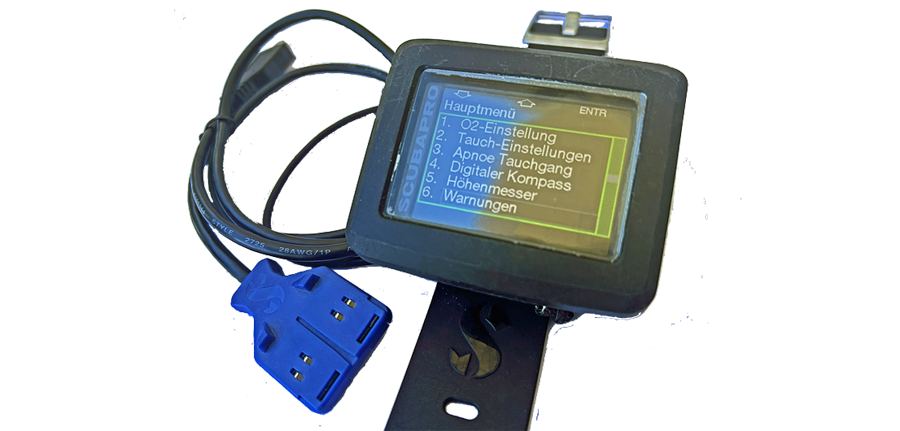
It meets all the requirements a diver could have for a modern dive computer.
Features include the advanced ZH-L16 ADT MB algorithm with multi-gas calculation, a full-color display with color-coded warnings, various layouts and graphics, extensive customization options, an integrated digital 3D compass, free software updates, and a built-in rechargeable battery with a runtime of approximately 40 hours, which can then be easily recharged using the included USB charging cable. It costs around 650 Swiss francs with the transmitter.
Conclusion: Since 1983, dive computers have evolved from simple decompression calculators into powerful diving assistants. They make an indispensable contribution to keeping the “enemy nitrogen” under control and making diving safer.
NITROX - Less nitrogen, more oxygen
Another effective way to keep nitrogen levels under control is to adjust the breathing gas. The less nitrogen the breathing gas contains, the less nitrogen the body absorbs over a comparable period of time. This method is known as nitrox diving.
Nitrogen absorption can be controlled almost completely when diving with the Air-28 breathing mixture offered as standard by SUBEX.
This reduces the nitrogen content from 79% to 72%, while increasing the oxygen content from 21% to 28%.
Both are crucial factors influencing the saturation and desaturation processes in the body. There is another crucial point: The dive computer remains in normal mode for 21% oxygen, meaning it is not switched to 28% oxygen. The advantages are clear: The dive computer calculates decompression based on 7% more nitrogen than is actually absorbed. This provides an additional safety margin.
Since the introduction of Air 28 in 2006, there has been—with the exception of a single case—no incident related to nitrogen saturation and desaturation.
Final Thoughts: Knowledge Equals Safety
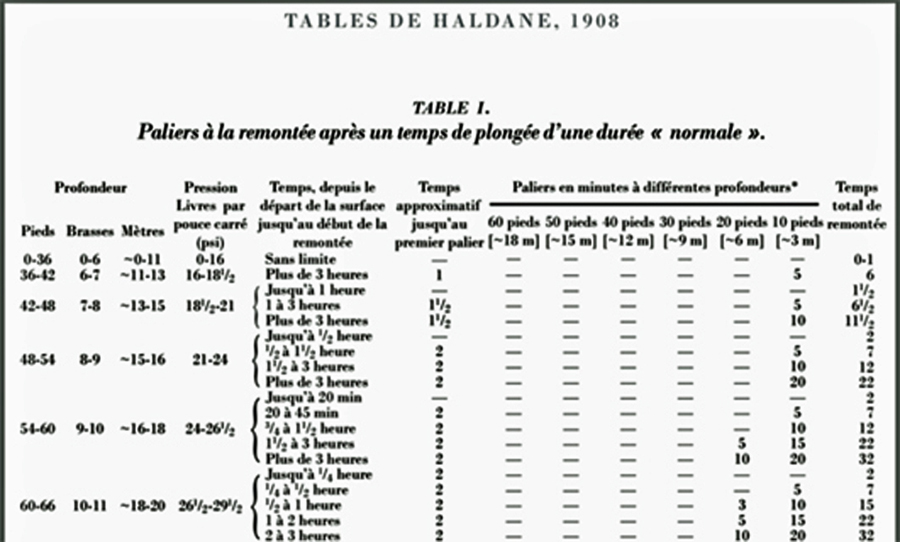
Advances in decompression research—from Haldane’s early findings and Bühlmann’s models to modern dive computers and nitrox—have made diving safer than ever before. Today, we have a understanding of the processes of nitrogen saturation and much better desaturation and have reliable tools for planning and monitoring our dives. Nevertheless, the most important safety factor remains the diver himself. Dive tables and computers provide valuable information, but their effectiveness depends on how responsibly the diver uses them. Careful planning, conservative decisions, and adherence to proven rules are crucial for minimizing risks.
Most accidents are not inevitable fate, but are often the result of poor decisions or disregard for known limits. Those who understand the basics of decompression and adjust their behavior accordingly can significantly reduce the risks.
Conclusion: The human factor remains the decisive one.
Nitrogen remains a constant companion underwater—but one that we can successfully keep under control with knowledge, experience, and discipline.
Photos & Sketches by Johann Vifian
Sources: Technical literature, manuals, https://commons.wikimedia.org/